FIG. 01 · CASE STUDY · SOFTGOODS · ARTCENTER
Workshop Warrior
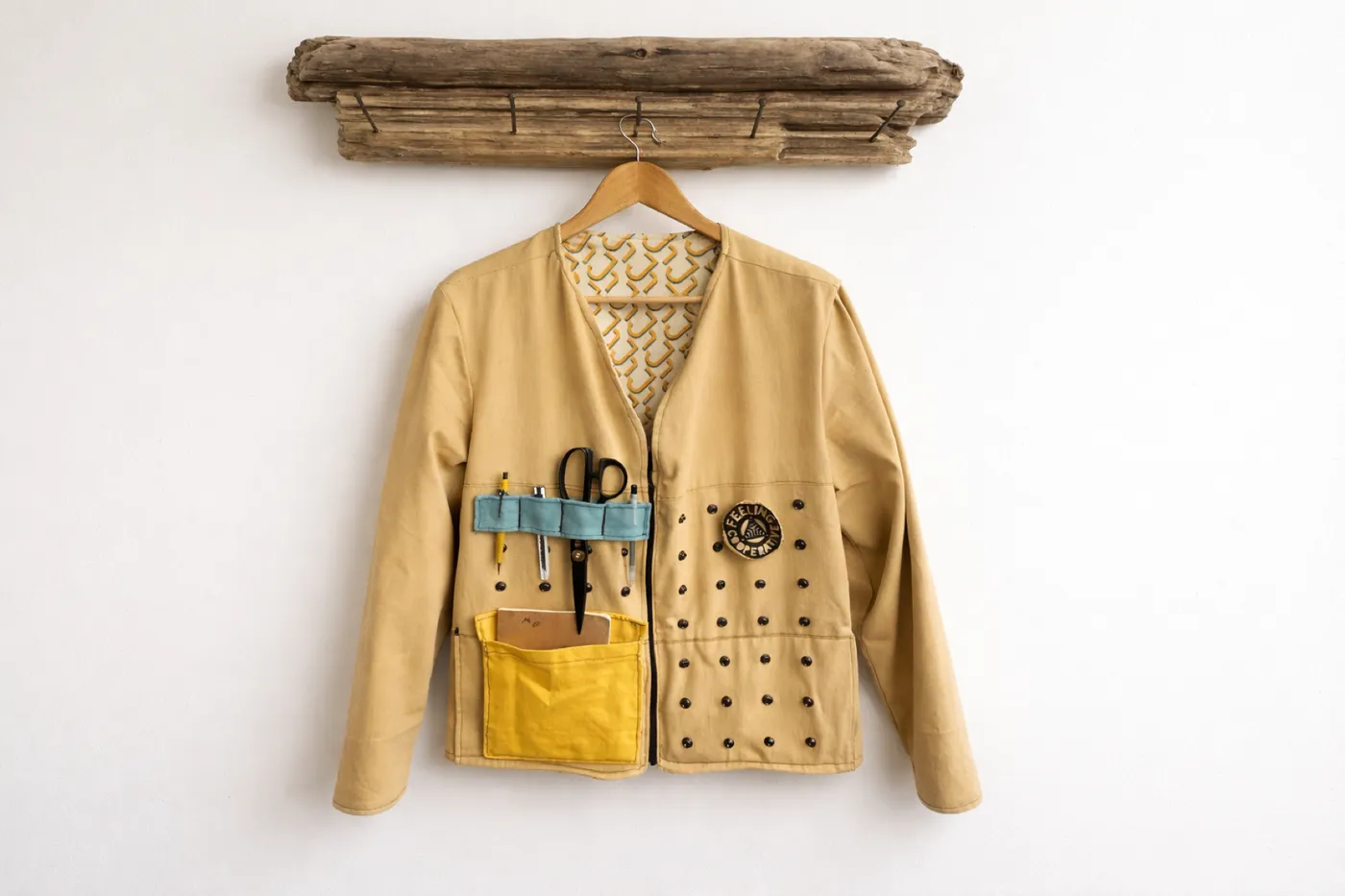
A pocket that makes sense in the workshop is dead weight at the skatepark. Workshop Warrior is a chore coat that changes with the day: pockets and tool holders snap on where the work is.
a pegboard you can wear
SPEC SHEET
- Role
- Design, patterning, sewing
- Pattern
- CLO3D
- Cutting
- Modified Silhouette Cameo
- Attachment
- Snap grid on the front panels, 1 in. apart
- Shell
- Tan [fabric and weight]
- Lining
- Custom fleece
- Rounds
- 3: grey waxed canvas with a yellow yoke, then black, then tan
From flat pattern to finished coat
The front is a grid of snaps, an inch apart, set one at a time with a punch and a hammer. Pockets and tool holders snap on wherever the work needs them: a strip for scissors, pens and a seam ripper up high, a deep chore pocket for a sketchbook down low. Take them off and it's just a jacket. There's a pocket hidden in the side seam, and a custom fleece lining.
01 · SKETCH
It started as ten sketches of a pegboard you could wear.
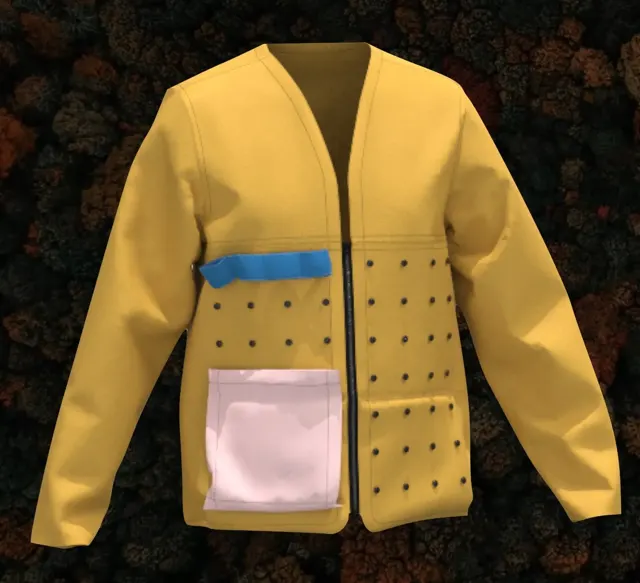
02 · PATTERN IN CLO3D
Pattern drafted in CLO3D and checked in 3D before any fabric was cut.
03 · PRINT AND CUT
Pieces cut digitally on a modified Silhouette Cameo, then laid out on the cloth.
04 · TOILE
Cut and sewn three times: grey waxed canvas with a yellow yoke, then black, then tan with the snaps in.
05 · WEAR IT
It gets worn at the sewing machine, which is the only test that counts.
The parts that move
Take the modules off and it's just a jacket.
WHY CLO3D
Fewer guesses before the first cut
[Your words: what simulating the pattern in 3D caught before cutting, and what still only showed up in the physical toile.]
What I learned
[One sentence: the most useful lesson from the three rounds.]
Next iteration
[What I'd change next time.]